
From Stroke to Strength: How Rehabilitation Helps Rebuild Mobility and Independence
 by
by 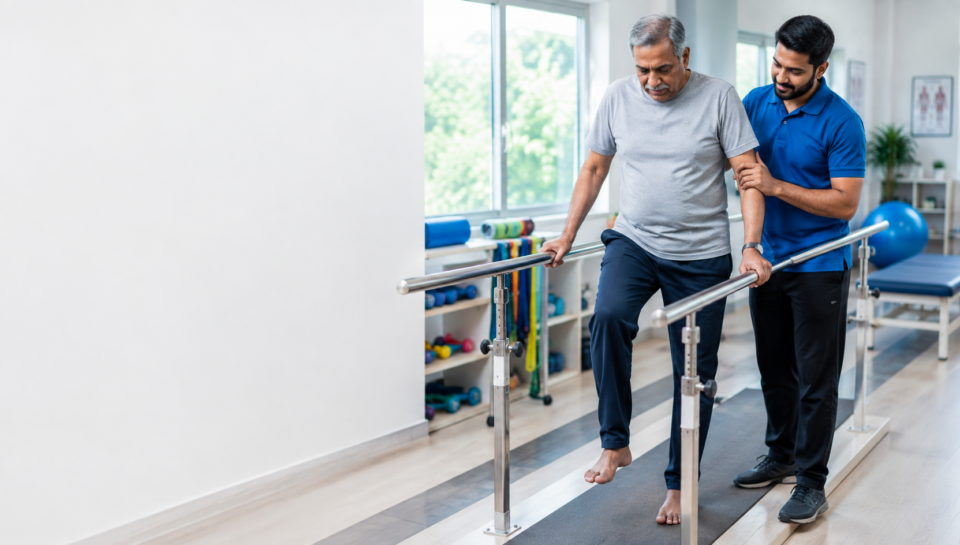
A stroke can change a person’s ability to walk, balance, communicate, use their hands, and perform everyday activities. Recovery does not necessarily end after hospital treatment. For many people, rehabilitation is an important part of the journey toward regaining physical function, confidence, and independence.
Stroke rehabilitation focuses on helping individuals improve the skills affected by a stroke through structured, personalized therapy. The recovery process can vary considerably from one person to another, but appropriate rehabilitation and consistent practice can help patients work toward meaningful functional goals.
At Book My Rehab, we believe that recovery is more than just healing it’s about regaining strength, restoring confidence, and getting back to the life you love. Whether you’re recovering from surgery, managing a sports injury, or living with a chronic condition, our expert team is here to support you every step of the way. Book My Rehab offers trusted physiotherapy and rehabilitation in Vasai, Virar, and Nalasopara, providing personalized care for pain relief, recovery, and better mobility through expert-led, evidence-based treatments.
What Happens After a Stroke?
A stroke occurs when blood flow to part of the brain is interrupted or when bleeding occurs in the brain. Because different areas of the brain control different functions, the effects of a stroke can vary significantly.
Some people may experience:
- Weakness on one side of the body
- Difficulty walking
- Poor balance and coordination
- Reduced hand or arm movement
- Muscle stiffness or changes in muscle tone
- Difficulty performing daily activities
- Problems with endurance and physical activity
The extent of recovery depends on factors such as the type and severity of the stroke, the area of the brain affected, overall health, and the individual’s rehabilitation program.
Why Stroke Rehabilitation Matters
Rehabilitation helps patients work on the physical and functional difficulties that remain after a stroke. Instead of focusing only on strength, a comprehensive program looks at how a person moves and performs everyday tasks.
The goals may include:
- Improving walking ability
- Increasing muscle strength
- Improving balance
- Developing better coordination
- Increasing joint mobility
- Improving functional independence
- Reducing the risk of falls
- Building confidence with movement
Rehabilitation goals should be realistic, measurable, and personalized to the patient’s abilities.
The Role of Physiotherapy in Stroke Recovery
Physiotherapy is an important component of stroke rehabilitation, particularly for patients experiencing mobility and movement difficulties.
A physiotherapist may assess walking patterns, balance, muscle strength, joint movement, posture, and functional abilities before developing an individualized treatment plan.
Depending on the patient’s condition, therapy may include strengthening exercises, balance training, mobility exercises, gait training, and functional movement practice.
The focus is not simply on performing exercises but on helping the patient use improved movement in real-life situations.
Rebuilding Walking Ability After a Stroke
Walking difficulties are common after a stroke. Patients may have weakness, poor coordination, balance problems, or difficulty controlling one leg.
Gait rehabilitation may involve practicing:
- Standing safely
- Weight shifting
- Stepping
- Walking with appropriate support
- Turning
- Navigating different surfaces
- Climbing stairs when appropriate
The therapist may use parallel bars, walking aids, or other rehabilitation equipment depending on the patient’s needs.
Progress should be gradual. The objective is to improve safe and functional movement rather than rushing the recovery process.
Improving Balance and Preventing Falls
Balance problems can make everyday activities challenging and may increase the risk of falls.
Balance rehabilitation can involve exercises that gradually challenge the patient’s ability to maintain stability while sitting, standing, reaching, or walking.
Therapy may also focus on practical skills such as getting up from a chair, changing direction, and moving safely around the home.
Family members and caregivers can also learn how to create a safer environment and provide appropriate assistance without unnecessarily limiting the patient’s independence.
Regaining Arm and Hand Function
A stroke can affect the ability to use an arm or hand for everyday activities. Patients may have weakness, reduced coordination, stiffness, or difficulty controlling specific movements.
Rehabilitation may incorporate task-specific activities that encourage patients to use the affected limb during appropriate daily tasks.
Depending on the individual’s condition, therapy can focus on:
- Reaching
- Grasping
- Releasing objects
- Hand coordination
- Upper-limb strength
- Functional activities
Repeated practice is often an important part of motor recovery.
Improving Independence in Daily Activities
The ultimate goal of rehabilitation is not simply to improve clinical measurements, it is to help patients participate more independently in everyday life.
Functional rehabilitation may involve practicing activities such as:
- Getting out of bed
- Sitting and standing
- Walking around the home
- Using stairs
- Dressing
- Eating
- Personal hygiene
- Moving between a bed and chair
Therapy can be adapted to the activities that are most important to each individual.
The Importance of Consistency During Rehabilitation
Stroke recovery is often a gradual process. Progress may not always be immediately noticeable, which can be frustrating for patients and families.
Regular therapy and appropriate home exercises can help patients continue practicing the movements and skills addressed during rehabilitation.
However, exercises should be performed according to professional guidance. A patient’s program may need to change as their strength, mobility, fatigue levels, and functional abilities change.
How Families and Caregivers Can Support Recovery
Family involvement can make the rehabilitation journey easier and more encouraging.
Caregivers can support recovery by:
- Encouraging safe participation in daily activities
- Following the therapist’s recommendations
- Helping maintain a consistent routine
- Keeping the home environment safe
- Providing emotional encouragement
- Avoiding unnecessary assistance when the patient can safely perform a task independently
The goal should be to provide support while encouraging the patient’s growing independence.
Why Personalized Stroke Rehabilitation Is Important
Every stroke is different, so there is no single rehabilitation program that works for everyone.
A personalized program considers:
- Stroke-related impairments
- Current mobility
- Muscle strength
- Balance
- Coordination
- Fatigue
- Age and general health
- Previous activity level
- Daily functional goals
Treatment can then be progressed as the patient develops greater control and confidence.
When Should Stroke Rehabilitation Begin?
Rehabilitation may begin during the hospital or early recovery period when the medical team determines that the patient is medically stable. The specific timing and intensity depend on the individual’s condition.
After discharge, continuing rehabilitation can help patients work toward longer-term mobility and independence goals.
If new or worsening neurological symptoms occur, immediate medical evaluation is important rather than attempting to manage them through rehabilitation alone.
Supporting Long-Term Recovery
Stroke recovery is not only about the first few weeks or months. Many patients continue working on mobility, strength, balance, and functional skills over a longer period.
Long-term rehabilitation may focus on maintaining improvements, increasing physical activity safely, preventing falls, and adapting exercises as abilities change.
Healthy lifestyle habits, appropriate medical follow-up, adequate nutrition, and regular physical activity can also contribute to overall well-being.
Why Choose Book My Rehab for Stroke Rehabilitation?
Book My Rehab provides personalized physiotherapy and rehabilitation services in Vasai, Virar, and Nalasopara. Our approach focuses on helping patients improve mobility, manage physical limitations, and work toward greater independence through expert-led, evidence-based rehabilitation.
Each patient’s recovery journey is different. Our rehabilitation approach is therefore centered around individual needs, functional goals, and gradual progress.
Conclusion
Going from stroke to strength is a journey that requires patience, consistency, professional guidance, and support. Stroke rehabilitation can help patients work toward better walking ability, balance, strength, coordination, and independence.
From practicing basic movements to relearning everyday activities, rehabilitation focuses on turning physical improvements into meaningful functional gains.
At Book My Rehab, we understand that recovery is about more than physical healing. It is about helping patients regain confidence, participate in everyday life, and move toward greater independence. With personalized rehabilitation and continued support, every step forward can become part of a meaningful recovery journey.
Frequently Asked Questions
Stroke rehabilitation is a structured therapy program designed to help individuals improve physical, functional, and mobility-related difficulties after a stroke.
Yes. Physiotherapy can help address problems such as weakness, balance difficulties, walking problems, reduced coordination, and limited mobility.
Yes. Gait and mobility training can help patients practice standing, stepping, weight shifting, walking, turning, and other functional movements according to their abilities.
There is no fixed recovery timeline. Progress depends on the severity and location of the stroke, overall health, existing impairments, and consistency with rehabilitation.
Rehabilitation can help patients practice everyday activities and develop the strength, balance, and coordination needed to perform appropriate tasks more independently.
Yes. Balance training can help patients improve stability during sitting, standing, walking, and functional activities while also addressing fall-risk factors.
Home exercises and appropriate activity practice can complement professional therapy. Patients should follow an individualized program provided by their rehabilitation professional.
Book My Rehab provides personalized physiotherapy and rehabilitation services in Nalasopara, along with services in Vasai and Virar, focused on mobility, recovery, and functional independence.