
Paralysis Rehabilitation in Nalasopara: Treatment, Physiotherapy and Recovery Guide
 by
Paralysis can significantly affect a person’s movement, independence, and quality of life. Simple daily activities such as walking, standing, getting out of bed, dressing, or using the hands may become challenging when a neurological condition affects muscle control.
Although recovery varies from person to person, appropriate medical treatment and rehabilitation can help many individuals work toward better mobility, functional ability, and independence. Physiotherapy may play an important role in helping patients practise movement, maintain joint flexibility, improve balance, and manage everyday activities according to their abilities.
For individuals and families looking for paralysis rehabilitation in Nalasopara, understanding the treatment process, benefits of physiotherapy, and factors affecting recovery can help them make informed decisions.
What Is Paralysis?
Paralysis is the partial or complete loss of voluntary movement in one or more parts of the body. It can occur when the brain, spinal cord, or nerves responsible for controlling muscles are damaged or affected by a medical condition.
The symptoms depend on the underlying cause and the area of the nervous system involved. Some people experience weakness on one side of the body, while others may have movement difficulties affecting both legs or all four limbs.
Paralysis may occur following a stroke, spinal cord injury, traumatic brain injury, or certain neurological disorders. Some individuals also experience changes in sensation, muscle stiffness, balance, or coordination.
A medical assessment is essential to identify the cause and determine the appropriate treatment and rehabilitation plan.
What Are the Common Causes of Paralysis?
Understanding the cause of paralysis is important because treatment and recovery expectations differ between conditions.
1. Stroke
A stroke occurs when blood flow to part of the brain is interrupted or bleeding damages brain tissue. Depending on the affected area, a person may experience weakness or paralysis on one side of the body.
Stroke rehabilitation may focus on improving movement, balance, walking ability, hand function, and independence with daily activities.
Important: Sudden weakness or paralysis, facial drooping, difficulty speaking, or sudden loss of balance may indicate a stroke. Seek emergency medical care immediately.
2. Spinal Cord Injury
Damage to the spinal cord can interrupt communication between the brain and parts of the body. The effects depend on the location and severity of the injury.
Rehabilitation may involve mobility training, positioning, strengthening of available muscle groups, transfer practice, and the appropriate use of mobility aids.
3. Traumatic Brain Injury
A brain injury can affect movement, coordination, balance, and functional abilities. Some patients may need a combination of physiotherapy and other rehabilitation services depending on their symptoms.
4. Neurological Conditions
Certain neurological disorders can affect muscle control, strength, and movement. Rehabilitation requirements depend on the specific diagnosis, the symptoms, and the person’s overall medical condition.
What Is Paralysis Rehabilitation?
Paralysis rehabilitation is a structured process designed to help individuals improve or maintain their functional abilities following neurological damage or illness.
The main goal is to help patients make the best possible use of their remaining abilities while addressing movement limitations and daily challenges.
A rehabilitation program may include physiotherapy, mobility exercises, balance training, strengthening, positioning, functional movement practice, and caregiver education.
The treatment plan should be personalized. An exercise that is appropriate for one patient may not be suitable for another, particularly when their underlying conditions or levels of movement differ.
How Does Physiotherapy Help in Paralysis Rehabilitation?
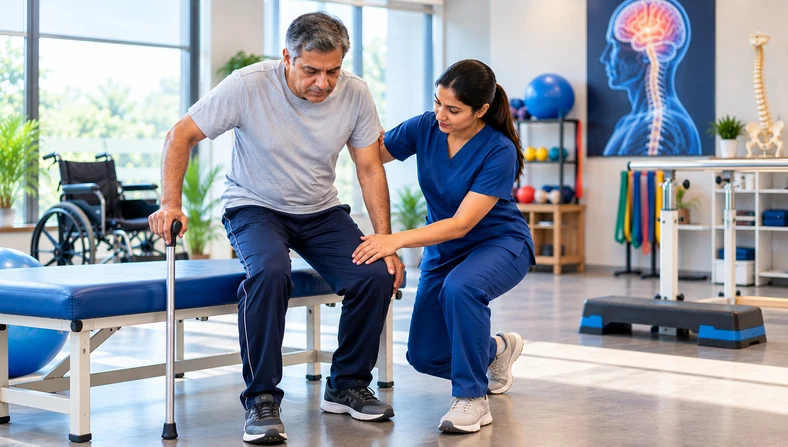
Physiotherapy is often an important part of rehabilitation for people experiencing paralysis. Depending on the patient’s condition, treatment may focus on movement, strength, balance, joint flexibility, and everyday function.
1. Improving Muscle Function
Paralysis may reduce a person’s ability to activate or control certain muscles. A physiotherapist can assess the patient’s movement and select exercises appropriate to their abilities.
Treatment may involve assisted movements, active exercises where possible, and strengthening of muscle groups that can be safely trained.
The objective is to help patients practise movement and maintain or improve their physical function.
2. Maintaining Joint Flexibility
Reduced movement can contribute to joint stiffness and muscle shortening. Guided range-of-motion exercises and appropriate positioning may help maintain joint mobility.
These activities should be selected according to the patient’s condition, especially if they have reduced sensation, pain, or other medical complications.
3. Improving Balance and Coordination
Some patients experience difficulty sitting upright, standing, turning, or shifting their weight safely.
Depending on their abilities, rehabilitation may include supported sitting, balance activities, controlled weight shifting, and coordination exercises.
These activities can help patients practise movement in a supervised environment.
4. Supporting Walking and Mobility
Some people with paralysis may be able to practise standing or walking with assistance, while others may require wheelchairs or other mobility aids.
When appropriate, gait training may include supported standing, step practice, walking with prescribed aids, and exercises to improve movement control.
The rehabilitation team determines which activities are safe and suitable for each individual.
5. Improving Daily Functional Activities
Rehabilitation is not limited to exercise. It can also focus on practical movements needed for everyday life.
These may include:
- Rolling and repositioning in bed
- Moving from a bed to a chair
- Sitting and standing safely
- Practising transfers
- Improving wheelchair mobility
- Participating in personal care activities
The goals depend on the patient’s current abilities and the level of assistance they require.
What Are the Different Stages of Paralysis Recovery?
Recovery does not follow the same timeline for every patient. The rehabilitation process is adjusted according to medical stability, the cause of paralysis, and changes in functional ability.
Stage 1: Medical Stabilization and Initial Assessment
The first priority is treating the underlying medical condition and ensuring that the patient is medically stable.
Once rehabilitation is appropriate, the healthcare team assesses movement, strength, joint flexibility, balance, and functional limitations.
Stage 2: Early Rehabilitation
Depending on medical advice, early rehabilitation may include positioning, gentle movement, supported sitting, and other activities suited to the patient’s condition.
The purpose is to begin addressing movement limitations while following appropriate safety precautions.
Stage 3: Strength and Mobility Training
As the patient’s condition permits, rehabilitation may progress to more active exercises, balance practice, transfer training, and walking activities where appropriate.
Progression should be gradual and supervised according to the patient’s needs.
Stage 4: Functional Independence
Later rehabilitation may focus on improving everyday activities, safe mobility, use of assistive devices, and participation at home or in the community.
Not every patient reaches the same level of recovery. Goals should be realistic, meaningful, and reviewed regularly.
How Long Does Paralysis Rehabilitation Take?
The duration of rehabilitation varies significantly.
Some patients make progress over weeks or months, while others require longer-term rehabilitation and ongoing support. Recovery depends on several factors, including:
- The cause and severity of paralysis
- The area of the nervous system affected
- The patient’s general health and medical stability
- The amount of movement and strength currently available
- Other medical conditions or complications
- The patient’s individual functional goals
- Response to treatment and rehabilitation
A qualified healthcare team can help establish realistic goals and review progress over time. No specific recovery timeline or outcome can be guaranteed.
Why Caregiver Support Matters During Rehabilitation
Family members and caregivers can play an important role in supporting people living with paralysis.
They may help the patient follow the recommended routine, attend appointments, use prescribed mobility aids, and practise activities according to professional guidance.
Caregivers should receive appropriate instructions before attempting transfers, lifting, or assisted exercises. Incorrect handling can increase the risk of injury to both the patient and caregiver.
The home environment may also need adjustments, such as clearing walking paths, improving access to frequently used items, and following recommendations for fall prevention and skin care.
When Should You Consider Paralysis Rehabilitation?
A medical professional may recommend rehabilitation when paralysis or neurological weakness affects movement and daily activities.
Consider asking about rehabilitation if the patient experiences:
- Difficulty sitting, standing, or walking
- Reduced muscle control
- Joint stiffness due to limited movement
- Balance or coordination problems
- Difficulty transferring between a bed and chair
- Reduced ability to perform daily activities
- A need for guidance on safe mobility and assistive devices
Rehabilitation should begin at a time and intensity appropriate to the patient’s medical condition. Do not start exercises independently after a new neurological injury without medical guidance.
Paralysis Rehabilitation in Nalasopara at Book My Rehab
For families searching for paralysis rehabilitation in Nalasopara, choosing a rehabilitation service that understands the patient’s condition and functional needs is an important step.
Book My Rehab provides physiotherapy and rehabilitation services in Nalasopara, Vasai, and Virar. Rehabilitation may support people experiencing mobility limitations related to stroke, spinal cord injury, and other neurological conditions, depending on their individual requirements.
The rehabilitation goals may include:
- Practising safe movement and transfers
- Maintaining joint flexibility
- Working on muscle strength and physical function
- Improving balance and mobility where possible
- Practising everyday activities
- Supporting caregivers with safe assistance techniques
Every rehabilitation plan should be tailored to the patient’s diagnosis, abilities, medical advice, and goals. Patients recovering from a stroke or spinal cord injury should continue to follow the instructions of their treating medical team.
Families can contact Book My Rehab to discuss their rehabilitation requirements and confirm the services appropriate for the patient.
Conclusion
Paralysis can affect movement, independence, and everyday life, but appropriate treatment and rehabilitation may help individuals work toward meaningful functional goals.
Paralysis rehabilitation may include physiotherapy, mobility training, balance activities, joint movement exercises, functional practice, and caregiver education. The appropriate approach depends on the cause of paralysis, the patient’s medical condition, and their current abilities.
If you are looking for paralysis rehabilitation in Nalasopara, Book My Rehab provides physiotherapy and rehabilitation services in Nalasopara, Vasai, and Virar.
A professional assessment can help determine suitable rehabilitation goals and the next steps in the patient’s recovery journey.
Frequently Asked Questions
1. Can physiotherapy help people with paralysis?
Physiotherapy may help suitable patients practise movement, maintain joint flexibility, work on balance, and improve functional abilities. The potential benefits depend on the underlying condition and the severity of neurological damage.
2. How long does paralysis rehabilitation take?
The duration varies according to the cause of paralysis, medical stability, functional limitations, and response to rehabilitation. Some people need several months of support, while others require longer-term care.
3. Can a person walk again after paralysis?
Some people regain the ability to walk, sometimes with assistance or mobility aids, while others may continue to need a wheelchair or other support. The outcome depends on the underlying condition and the extent of neurological damage.
4. What exercises are used in paralysis rehabilitation?
Exercises may include assisted joint movements, strengthening, balance practice, transfer training, and gait training when appropriate. The exercise program should be selected by qualified professionals based on the patient’s condition.
5. Is paralysis rehabilitation suitable after a stroke?
Yes. Rehabilitation is an important part of care for many stroke survivors. Treatment goals may include movement, balance, walking, hand function, and daily activities, according to the patient’s needs and medical recommendations.
6. Where can I find paralysis rehabilitation in Nalasopara?
Book My Rehab offers physiotherapy and rehabilitation services in Nalasopara, Vasai, and Virar. Contact the centre to discuss the patient’s condition and confirm suitable rehabilitation services.