
Knee Pain While Climbing Stairs: Causes and Physiotherapy Solutions
 by
Do you experience knee pain while climbing or coming down stairs? This is a common problem that can affect people of different age groups. Activities such as climbing stairs, getting up from a chair, squatting, and walking downhill can become uncomfortable when the knee joint is affected.
Knee pain may develop due to muscle weakness, joint problems, injuries, or changes in the cartilage around the knee. Understanding the underlying cause is important for choosing the right treatment. Physiotherapy can help improve knee strength, flexibility, stability, and everyday movement.
Why Does Your Knee Hurt While Climbing Stairs?
Climbing stairs places additional demands on the knee joint and surrounding muscles. Some common reasons for knee pain include:
1. Patellofemoral Pain Syndrome
This condition causes pain around or behind the kneecap. It may become more noticeable while climbing stairs, squatting, or sitting with bent knees for long periods.
2. Knee Osteoarthritis
Osteoarthritis involves gradual changes in the joint cartilage. It can cause pain, stiffness, swelling, and difficulty climbing stairs, particularly in older adults.
3. Weak Thigh Muscles
The quadriceps muscles help support knee movement. When these muscles are weak, everyday activities such as climbing stairs may become more difficult.
4. Meniscus Injury
The meniscus is a cartilage structure that helps cushion the knee joint. A tear may cause pain, swelling, stiffness, or difficulty bending the knee.
5. Tendon Problems
Irritation of the tendons around the kneecap can cause discomfort during activities that involve repeated knee bending and straightening.
How Physiotherapy Helps Manage Knee Pain
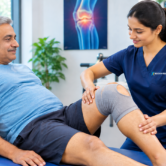
Physiotherapy focuses on improving knee function through exercises and appropriate rehabilitation techniques. A physiotherapist first assesses the patient’s symptoms, strength, flexibility, and movement before recommending a treatment plan.
Common physiotherapy approaches include:
1. Strengthening Exercises: Exercises targeting the quadriceps, hamstrings, and hip muscles help improve knee support and stability.
2. Flexibility Exercises: Gentle stretching may help reduce muscle tightness and improve comfortable movement.
3. Balance Training: Appropriate balance exercises can improve coordination and confidence during walking and stair climbing.
4. Movement Training: Physiotherapists may guide patients on proper techniques for climbing stairs, sitting, standing, and walking.
5. Pain Management: Depending on the condition, suitable therapeutic techniques may be used to help manage discomfort.
Simple Tips to Reduce Knee Discomfort
- Avoid excessive stair climbing when it increases your pain.
- Wear comfortable and supportive footwear.
- Maintain regular, appropriate physical activity.
- Avoid sudden increases in exercise intensity.
- Follow exercises recommended by your physiotherapist.
- Maintain a healthy body weight to reduce unnecessary stress on the knees.
If your knee becomes severely swollen, locks, gives way, or you cannot put weight on it, seek medical assessment. A hot, red knee with fever also needs prompt medical attention.
Knee Pain Physiotherapy in Nalasopara at Book My Rehab
If knee pain is affecting your daily activities, professional physiotherapy guidance can help you understand the condition and work towards better mobility.
Book My Rehab offers physiotherapy and rehabilitation support focused on individual needs, movement improvement, and functional recovery. Patients looking for knee pain physiotherapy in Nalasopara can explore suitable rehabilitation support based on their condition and recovery goals.
Conclusion
Knee pain while climbing stairs should not be ignored, especially when it repeatedly affects daily activities. Identifying the cause and following an appropriate physiotherapy programme can help improve strength, flexibility, and knee function. Early assessment and consistent rehabilitation can support better movement and quality of life.
Frequently Asked Questions
It may be caused by muscle weakness, patellofemoral pain syndrome, osteoarthritis, tendon problems, or a meniscus injury.
Yes. Physiotherapy can help improve muscle strength, flexibility, joint stability, and functional movement.
Appropriate exercises can improve the muscles supporting the knee. They should be selected according to the underlying condition.
Consult a qualified professional if knee pain persists, keeps returning, or interferes with walking, stair climbing, or other daily activities.