
Understanding Autism: Signs, Support, and the Role of Rehabilitation
 by
by 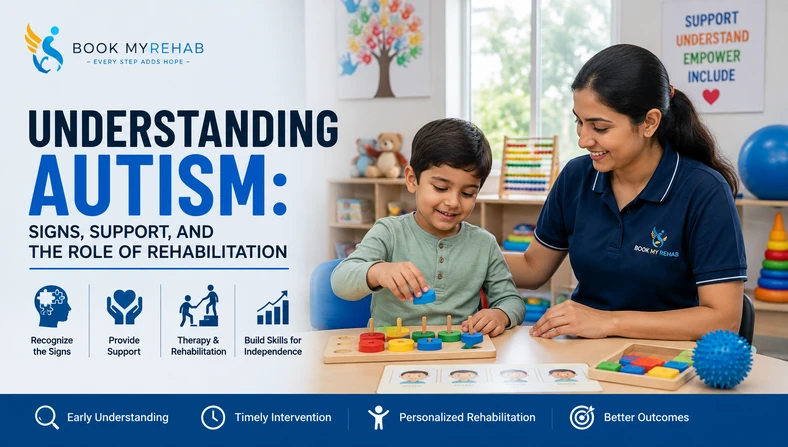
Autism, or Autism Spectrum Disorder (ASD), is a neurodevelopmental condition that can affect communication, social interaction, sensory processing, and patterns of behaviour. Autism is called a “spectrum” because every autistic person can have different strengths, challenges, and support needs.
Understanding autism can help parents, caregivers, teachers, and healthcare professionals provide appropriate support and create an environment where children can learn, communicate, and participate more comfortably.
What Is Autism?
Autism is a developmental condition that begins in early childhood and continues throughout life. It can influence how a person communicates, interacts with others, learns, and responds to their surroundings.
Some autistic children may have difficulty with social communication, while others may experience sensory sensitivities or prefer predictable routines. Some may also develop particular interests or demonstrate strong abilities in specific areas.
There is no single way that autism looks, which is why professional assessment is important.
Common Signs of Autism
Signs can vary considerably from one child to another. Some commonly observed characteristics may include:
- Difficulty maintaining social interaction
- Delayed or different patterns of speech and communication
- Limited use of gestures or facial expressions
- Repetitive movements or behaviours
- Strong preference for routines
- Sensitivity to sounds, lights, textures, or other sensory experiences
- Difficulty adapting to changes
- Intense interest in particular subjects or activities
- Differences in play or interaction with others
Having one or more of these characteristics does not automatically mean a child is autistic. A qualified healthcare professional should conduct an appropriate developmental assessment.
When Should Parents Seek Professional Advice?
Parents may consider seeking professional guidance if they notice persistent differences in their child’s communication, movement, social interaction, behaviour, or development.
Early professional evaluation can help families understand a child’s individual needs and identify suitable support.
It is important not to compare one child directly with another. Children develop at different rates, and a healthcare professional can provide a more appropriate assessment based on the child’s overall development.
How Can Children With Autism Be Supported?
There is no single intervention that works for every autistic child. Support should be based on the individual’s abilities, challenges, preferences, and goals.
Depending on their needs, a child may benefit from support such as:
- Speech and language therapy
- Occupational therapy
- Physiotherapy
- Behavioural and developmental interventions
- Social and communication support
- Educational support
- Sensory-based strategies
- Parent and caregiver guidance
A multidisciplinary approach can be useful when a child has several areas requiring support.
The Role of Physiotherapy in Autism
Autism itself is not treated through physiotherapy. However, some autistic children may have physical or motor-related challenges that can benefit from physiotherapy.
For example, physiotherapy may be considered when a child experiences difficulties with:
- Gross motor skills
- Balance and coordination
- Posture
- Muscle strength
- Mobility
- Physical activity participation
A physiotherapist can assess the child’s individual movement abilities and develop age-appropriate activities where appropriate.
The goal is not to make an autistic child behave or move in a particular way, but to support their functional abilities, independence, participation, and physical wellbeing.
Supporting a Child at Home
Parents and caregivers can also play an important role in supporting development and everyday participation.
Simple approaches may include:
Maintain Predictable Routines
Many children benefit from knowing what to expect. Consistent routines can make everyday activities easier to understand.
Encourage Communication
Communication can take different forms. Parents can support whichever communication methods work best for the child, including speech, gestures, pictures, or appropriate communication tools.
Encourage Physical Activity
Age-appropriate physical activities can help children develop strength, coordination, balance, and confidence while making movement enjoyable.
Understand Sensory Needs
Some children may be particularly sensitive to sounds, textures, lights, or crowded environments. Understanding these preferences can help families create more comfortable surroundings.
How BookMyRehab Can Support Rehabilitation Needs
BookMyRehab provides physiotherapy and rehabilitation support in Vasai, Virar, and Nalasopara, with a focus on helping individuals improve physical function and work toward greater independence.
For children who have specific physical or motor difficulties alongside autism, a physiotherapy assessment can help determine whether rehabilitation may be appropriate.
The approach should always be individualized, with therapy goals based on the child’s physical abilities and everyday needs.
Final Thoughts
Autism is a spectrum, and every autistic individual has their own strengths, challenges, and support requirements. Understanding these differences is an important first step toward providing meaningful support.
Early recognition, appropriate professional assessment, family involvement, education, and individualized therapies can all contribute to a child’s development and quality of life.
Most importantly, support should focus on helping autistic individuals communicate, participate, develop skills, and live as independently and comfortably as possible.
Frequently Asked Questions
Autism is a neurodevelopmental condition that can affect communication, social interaction, behaviour, sensory processing, and patterns of learning or activity.
Possible signs include differences in communication, social interaction, play, repetitive behaviours, sensory responses, and reactions to changes in routine. Professional assessment is needed for diagnosis.
Autism is a lifelong neurodevelopmental condition rather than an illness that can simply be cured. Support and therapies can help individuals develop skills and manage specific challenges.
Physiotherapy does not treat autism itself, but it may help autistic children who have physical or motor difficulties involving balance, coordination, posture, strength, or mobility.
Parents can speak with a pediatrician or qualified developmental professional if they have ongoing concerns about their child’s communication, behaviour, movement, or development.
No. Autism is a spectrum, and individuals can have very different abilities, challenges, communication styles, and support needs.